
- obsidian
- second-brain
- yapay-zeka
- telegram
- otomasyon
- dijital-kimlik
- whisper
- ai-agent
Obsidian Second Brain: Automating Data Entry with a Telegram Bot and Whisper
Capture on-the-go ideas automatically into Obsidian using a Telegram bot and Whisper, and build a digital memory that truly knows you.
Watch on Instagram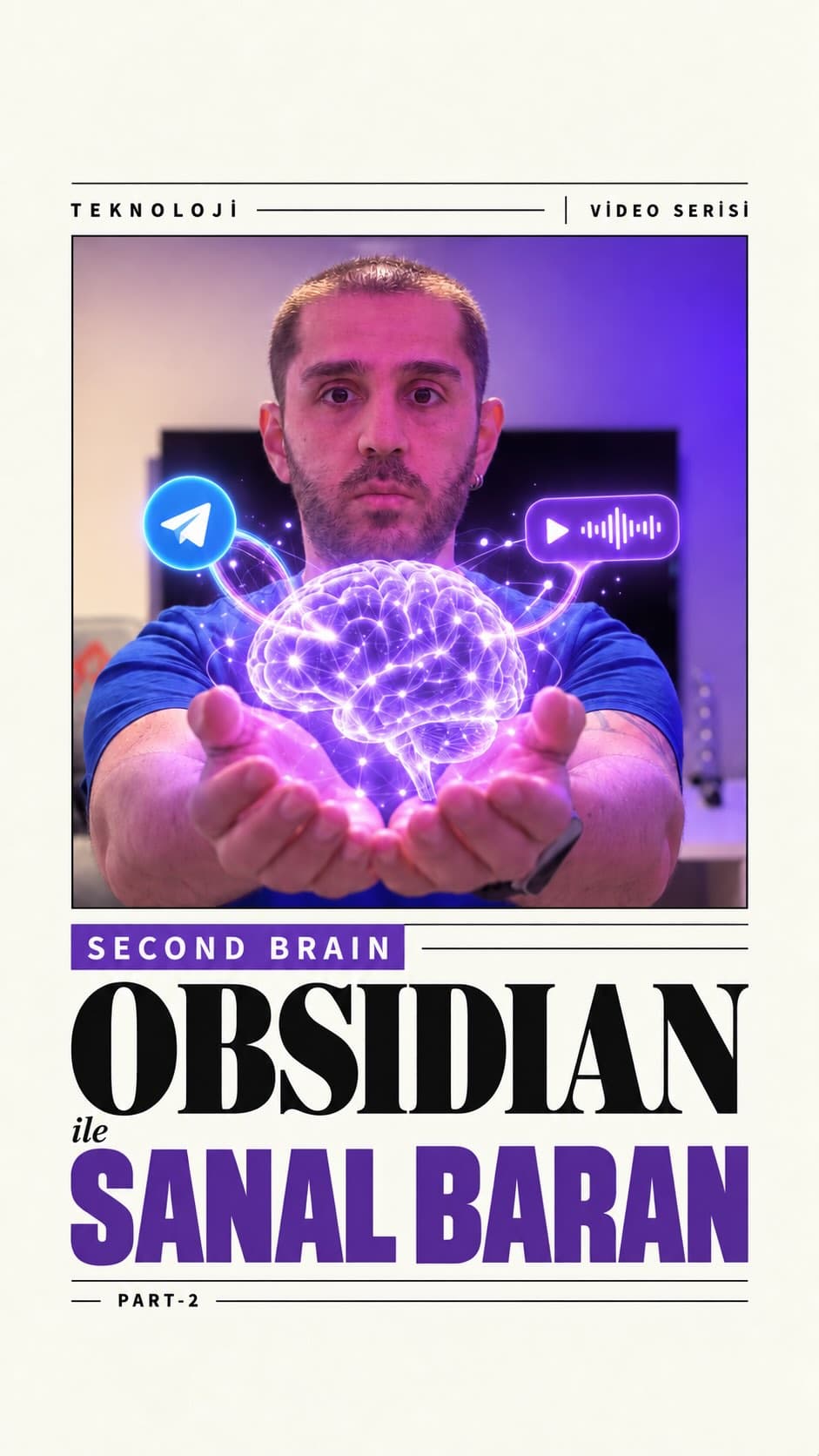
Having to re-introduce yourself to every new AI tool is exhausting. Who you are, what you work on, which projects you're juggling — the same story told over and over. Instead of repeating this loop, I decided to build a system that keeps this information updated and represents me automatically. Here's how I feed data into my Obsidian-based second brain and how I've automated the process.
The Problem: Re-explaining Yourself Every Time
Whenever I test a new AI agent or system, I have to provide the same background: what field I work in, what projects I'm running, what I know. To escape this cycle, I decided to create a continuously updated repository of my own knowledge, projects, and interests. Obsidian provides the ideal foundation for this kind of structure.
Capturing Ideas Instantly with a Telegram Bot
When an idea strikes while I'm out walking or in the middle of daily life, I'm not at my desk. To solve this, I built a Telegram bot. Through the bot I can either type a quick note using a command or send a voice message directly.
For voice messages, a Whisper model integrated into the bot transcribes my speech to text and automatically drops the result into the inbox inside Obsidian. Metadata such as the source channel and timestamp is added automatically as well.
The Inbox: A Reception Desk for Thoughts
The inbox in Obsidian acts like a reception desk. Whatever comes to mind goes in — an idea, a project thought, a book reflection, a content concept. The priority is not losing the moment.
Later, I have Claude process the accumulated notes and place them into the relevant sections of my knowledge base. This creates a bridge between raw input and organised information, without requiring me to manage the sorting manually.
A Memory That Actually Knows You
The real value of this system reveals itself over time. As I feed in the books I read, the shows I watch, and the projects I work on, the structure starts to understand me better. Getting a book recommendation from a system that knows my taste, or discussing a project with something that already has context, is a fundamentally different experience.
The same setup can be extended in many directions. Add voice output and it becomes a digital companion; add video and it could be an avatar attending meetings on your behalf. External sources like email or Spotify can be connected. The system is essentially open-ended.
Why Your Digital Identity Is Going to Matter
Just as a CV is essential when applying for a job today, I believe a file that defines you will be equally essential when working with AI agents in the near future. It doesn't seem far-fetched that agents will eventually communicate with each other directly, with humans simply giving approval. Some of us are already acting as messengers between our own agents.
For that reason, I'd encourage you to invest a little time in building your own digital identity. The starting point doesn't have to be elaborate — capturing your next idea is enough to begin.