
- ai
- openai
- elon-musk
- lawsuit
- regulation
Elon Musk vs OpenAI Lawsuit: The First Hearing and Sam Altman's Day in Court
Elon Musk's lawsuit against OpenAI and Sam Altman has had its first hearing. Both sides' arguments, the antitrust angle, and what the 'profit vs open-source mission' debate means for the AI industry.
Watch on Instagram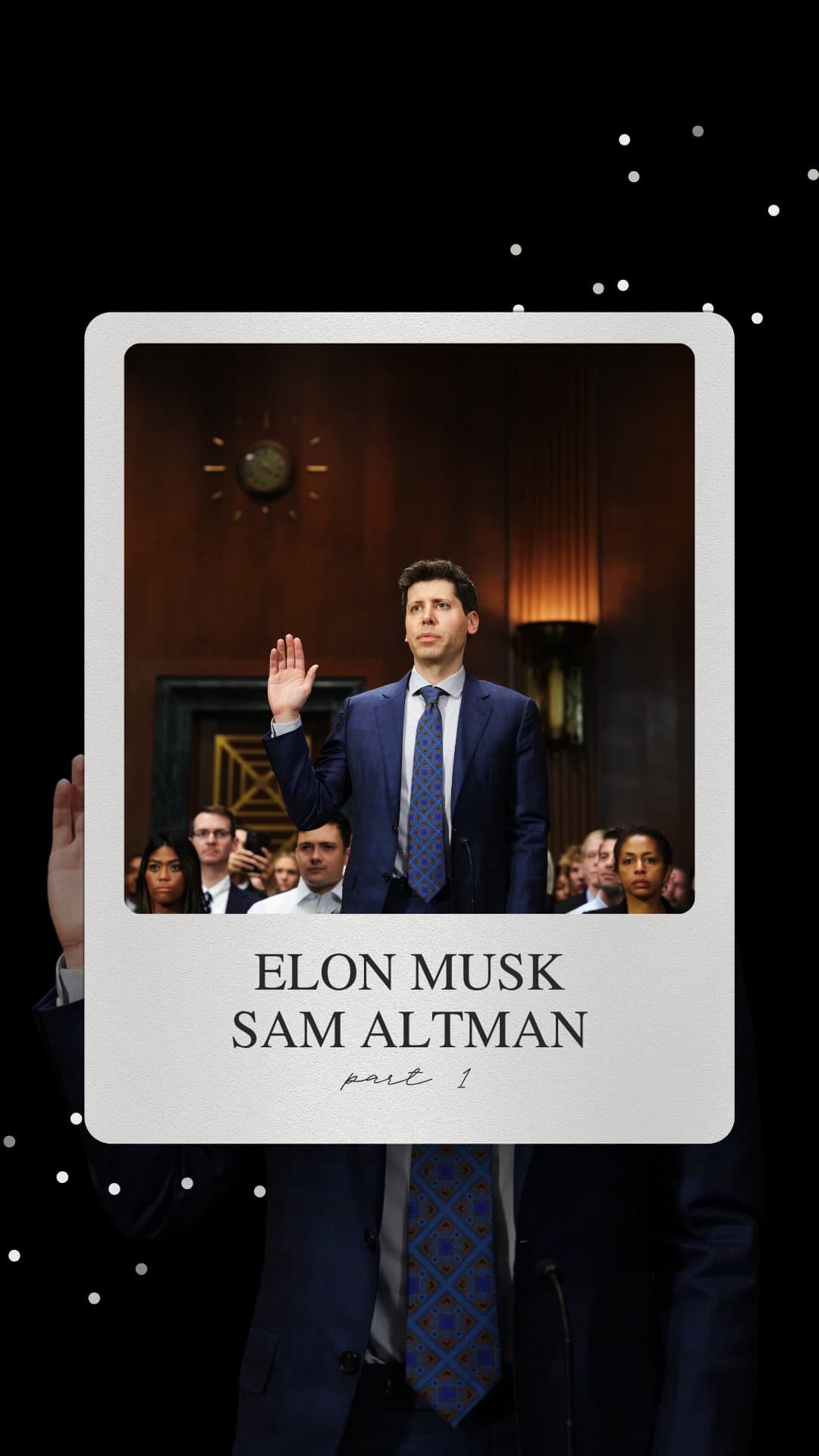
Elon Musk's lawsuit against OpenAI and Sam Altman has just had its first hearing. The court is still far from a verdict, but this step marks the formal start of a legal process that could shape the future of artificial intelligence. At the heart of the suit lies the claim that OpenAI has "drifted from its founding mission" and turned into a closed, for-profit company.
What the case is really about
OpenAI was founded in 2015 as a non-profit research lab focused on safe, open AI for the benefit of humanity. Elon Musk was one of the founding co-chairs, but stepped down from the board in 2018.
In the years since, OpenAI evolved into a closed, for-profit structure. The explosion of ChatGPT and the multi-billion-dollar partnership with Microsoft turned it into one of the most valuable AI startups on the planet.
Musk's claim: this transformation violated the founding agreement. AI is no longer in the hands of "humanity" but of a narrow group of investors and executives.
What happened in the first hearing?
First hearings usually deal with preliminary procedural matters — venue, jury demand, motions to dismiss, the scope of discovery. Musk's legal team pushed the antitrust angle, arguing that OpenAI and Microsoft together dominate the AI market in a way that warrants regulatory attention.
OpenAI's defence broadly denied the allegations and framed Musk's motivation as competitive: clearing runway for his own AI venture, xAI.
The court did not issue a ruling, and the case continues into the next stage.
The real question: mission or monopoly?
Reading this case as a personal feud between two tech CEOs misses the point. The real argument is about how advanced AI should be governed in the years ahead.
Those backing Musk see OpenAI as having raised millions of dollars under the banner of "open and for humanity," then transferring those assets to a closed for-profit entity — a betrayal of public trust. The Microsoft partnership, in their reading, makes the "AI monopoly" risk concrete.
Those backing OpenAI point out that pure research alone could not pay the massive hardware bill required to train modern frontier models. The hybrid structure (a non-profit overseeing a capped-profit company) is a compromise, not a pure profit grab.
What this means for the AI industry
The possible outcomes shape the field in very different directions:
- A ruling for OpenAI: the current structure is legitimised, and other non-profit labs can pivot more comfortably.
- A ruling for Musk: OpenAI may be forced to repay donations or revert to its founding mission. Every "non-profit to for-profit" pivot in the industry comes under scrutiny.
- An antitrust win: the Microsoft-OpenAI partnership goes back under the microscope, opening room for alternative AI providers in the developer and consumer market.
Whatever the result, this case will be remembered as the first major test of what "open" and "public benefit" mean in the AI era, settled in court rather than online.
What's your take — is Musk right, or is he trying to force open a door that has already closed?